
What Is Yoni Mudra? Meaning, Benefits, and How to Practice
Yoni Mudra is a powerful yogic gesture used in meditation and pranayama to turn awareness inward and calm the mind. Rooted in ancient yogic texts, this mudra is known for promoting deep concentration, emotional balance, and spiritual awareness. In today’s fast-paced world, Yoni Mudra is especially helpful for reducing stress, improving focus, and supporting mental well-being. This guide explains the meaning of Yoni Mudra, its benefits, and the correct way to practice it safely.
Meaning of Yoni Mudra
The word “Yoni” comes from Sanskrit and means womb, source, or origin, symbolizing creation and inner consciousness. “Mudra” means gesture or seal. Together, Yoni Mudra represents withdrawing the senses from the external world and directing awareness toward the inner self.
This mudra is traditionally practiced during meditation to create a sense of protection, grounding, and deep inner silence. It symbolizes returning to one’s original state of calm and awareness.
What Is Yoni Mudra?
Yoni Mudra is a meditative hand and body posture that involves closing the sensory organs—eyes, ears, nose, and mouth—using the fingers. By blocking external stimuli, the mind naturally turns inward, making it easier to enter a meditative state.
Yoni Mudra is commonly used in:
- Meditation practices
- Pranayama (breathing exercises)
- Kundalini Yoga
- Mindfulness and concentration training
Types of Yoni Mudra
There are two commonly practiced forms of Yoni Mudra:
1. Yoni Mudra (Sense-Withdrawal Form)
This involves using the fingers to gently close the eyes, ears, nostrils, and mouth during meditation.
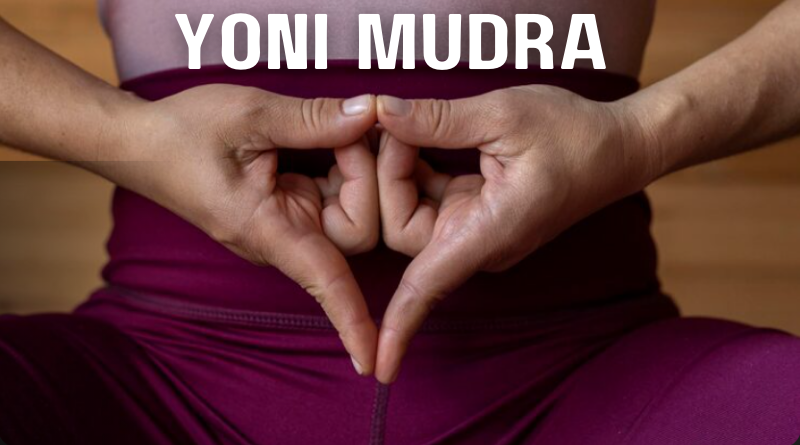
2. Yoni Mudra (Hand Gesture Form)
In this form, the fingers are interlaced in a symbolic hand position resembling the womb, often practiced while sitting in meditation.
Both forms aim to promote inner awareness and mental stillness.
Benefits of Yoni Mudra
Mental and Emotional Benefits
- Reduces stress, anxiety, and mental fatigue
- Improves focus, concentration, and memory
- Helps calm racing thoughts
- Encourages emotional stability and inner peace
Physical Benefits
- Relaxes the nervous system
- Supports better sleep quality
- Helps reduce headaches caused by stress
- Improves breath awareness and control
Spiritual Benefits
- Enhances meditation depth
- Supports self-awareness and mindfulness
- Helps awaken inner consciousness
- Prepares the mind for higher yogic practices
How to Practice Yoni Mudra (Step-by-Step)
Step 1: Choose a Comfortable Posture
Sit in a comfortable meditative position such as Padmasana, Sukhasana, or on a chair with your spine straight.
Step 2: Relax the Body
Close your eyes and take a few deep breaths to relax your body and mind.
Step 3: Hand Position
- Place your thumbs gently over your ears
- Use your index fingers to close your eyelids
- Middle fingers rest on the sides of the nose
- Ring and little fingers rest above and below the lips
Apply gentle pressure only, without strain.
Step 4: Breathing
Breathe slowly and deeply through the nose. Focus your attention on the space between your eyebrows (Ajna Chakra).
Step 5: Duration
Practice for 5–10 minutes initially. With experience, you may extend it to 15–20 minutes.
Best Time to Practice Yoni Mudra
- Early morning (Brahma Muhurta) is ideal
- Can also be practiced in the evening
- Practice on an empty stomach or at least 3–4 hours after meals
Precautions and Contraindications
- Avoid excessive pressure on the eyes and ears
- People with ear infections, glaucoma, or severe eye conditions should consult a yoga expert
- Do not practice if you feel dizzy or uncomfortable
- Always practice in a calm, quiet environment
Who Can Practice Yoni Mudra?
Yoni Mudra is suitable for:
- Beginners and experienced yoga practitioners
- Students seeking better concentration
- Individuals experiencing stress or anxiety
- Anyone interested in meditation and mindfulness
Yoni Mudra vs. Shanmukhi Mudra
Yoni Mudra is often compared with Shanmukhi Mudra, as both involve closing the sensory organs. While Shanmukhi Mudra is more commonly associated with advanced pranayama techniques, Yoni Mudra focuses more on meditation, inner awareness, and emotional balance.
Common Mistakes to Avoid
- Holding the breath forcefully
- Applying too much pressure on the eyes
- Practicing for too long in the beginning
- Practicing in a noisy or distracting place
Conclusion
Yoni Mudra is a simple yet deeply transformative yogic practice that helps quiet the mind and reconnect with inner awareness. By gently withdrawing the senses, it allows practitioners to experience calmness, clarity, and emotional balance. Whether you are a beginner or an experienced meditator, practicing Yoni Mudra regularly can support mental well-being, enhance focus, and deepen your spiritual journey.
Frequently Asked Questions (FAQs)
Q1. Is Yoni Mudra safe for daily practice?
Yes, when practiced gently and correctly, Yoni Mudra is safe for daily practice.
Q2. How long does it take to see benefits?
Most people experience calmness within a few sessions, while deeper benefits develop with regular practice.
Q3. Can Yoni Mudra be practiced before sleep?
Yes, it is beneficial before sleep as it helps relax the mind.
Q4. Do I need prior yoga experience to practice Yoni Mudra?
No, Yoni Mudra is suitable for beginners and does not require advanced yoga skills.