
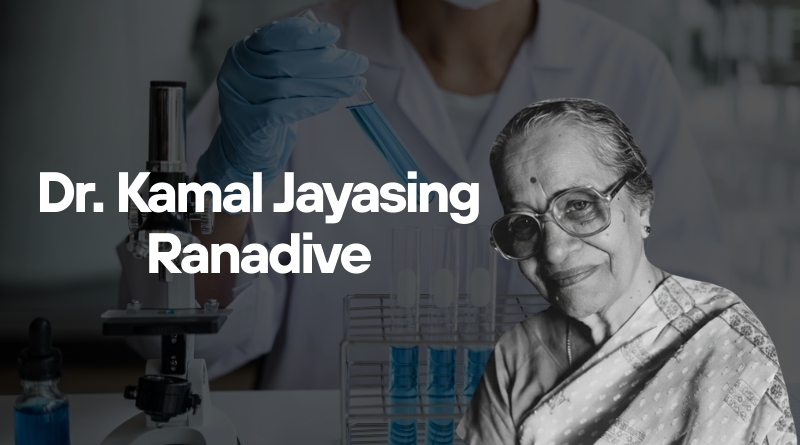
Who Was Kamal Ranadive? Life, Research, and Legacy
Dr. Kamal Jayasing Ranadive was one of India’s most influential biomedical scientists and a true pioneer in cancer research. At a time when women in science were rare, she broke barriers with her dedication, brilliance, and leadership. Her work laid the foundation for modern cancer biology and tissue culture research in India, while her social initiatives helped improve healthcare awareness among women and children.
Early Life and Education
Kamal Ranadive was born on 8 November 1917 in Pune, Maharashtra, then part of British India. Her father, Dinkar Dattatreya Samarath, was a respected biologist and professor at Fergusson College. He believed strongly in education and ensured that all his children, including Kamal, received quality schooling.
She completed her early education at Huzurpaga High School, Pune, where she proved to be a bright and disciplined student. Following her interest in science, she enrolled at Fergusson College, studying Botany and Zoology, and earned her B.Sc. degree with distinction in 1934.
Later, she pursued her Master’s degree (M.Sc.) in Cytogenetics at the Agriculture College in Pune, completing it in 1943. Her academic excellence during these years laid a strong foundation for her future research career.
Marriage and Move to Bombay
In 1939, Kamal married Jayasing Trimbak Ranadive, a mathematician who strongly supported her scientific ambitions. After marriage, she moved to Bombay (now Mumbai), where she joined Tata Memorial Hospital, marking the beginning of her professional journey in cancer research.
Balancing family life and academic pursuits, she continued her studies and worked toward her Ph.D. at the University of Bombay. She conducted her doctoral research under the mentorship of Dr. V. R. Khanolkar, a renowned pathologist and founder of the Indian Cancer Research Centre (ICRC).
She was awarded her Doctor of Philosophy degree in 1949.
International Exposure and Advanced Training
After completing her Ph.D., Dr. Khanolkar encouraged Kamal Ranadive to gain international research exposure. She secured a postdoctoral fellowship in the United States and trained at Johns Hopkins University under Dr. George Gey, the scientist famous for developing the HeLa cell line.
During this time, she gained advanced knowledge of tissue culture techniques, which were virtually unknown in India at that time. This experience proved to be a turning point in her career.
Professional Career in India
Upon returning to India, Kamal Ranadive rejoined the Indian Cancer Research Centre as a Senior Research Officer. In the early 1960s, she made history by establishing India’s first tissue culture research laboratory in Mumbai.
She played a key role in:
- Setting up laboratories for cell biology, immunology, and carcinogenesis
- Developing tissue culture media and research reagents
- Advancing experimental cancer research using animal models
Between 1966 and 1970, she served as the Acting Director of the Indian Cancer Research Centre, demonstrating exceptional leadership during a crucial phase of the institution’s growth.
Major Research Contributions
Dr. Ranadive’s research focused on understanding the biological causes of cancer. Her studies significantly advanced knowledge in:
- Breast cancer
- Leukemia
- Esophageal cancer
- The relationship between hormones, viruses, and cancer development
She also conducted important work on tumor viruses and helped establish a connection between viral infections and cancer susceptibility. Her foundational research contributed to the development of a leprosy vaccine, showcasing the wide impact of her scientific work.
Over her career, she published more than 200 scientific research papers, making her one of the most prolific Indian women scientists of her time.
Special Studies and Social Work
Beyond laboratory research, Kamal Ranadive was deeply concerned about public health. She conducted studies on:
- Genetic cancers in children
- Blood disorders (dyscrasias)
- Nutrition and health of tribal children
In 1989, she led a major study on the nutritional status of tribal children in Maharashtra. She also worked closely with rural women, offering guidance on health and medical care through government-supported initiatives.
Advocate for Women in Science
Dr. Ranadive was a founding member of the Indian Women Scientists’ Association (IWSA). Through this organization, she actively encouraged women to pursue careers in science and research, especially in medical and biological fields.
Her life became a source of inspiration for countless Indian women scientists who followed in her footsteps.
Awards and Recognition
Her outstanding contributions were recognized with several prestigious honors, including:
- Padma Bhushan (1982) – India’s third-highest civilian award
- Silver Jubilee Research Award (1964) from the Medical Council of India
- G. J. Watumull Foundation Prize for excellence in microbiology
She was also honored as an Emeritus Medical Scientist by the Indian Council of Medical Research (ICMR).
In 2021, Google paid tribute to her legacy with a Google Doodle on her 104th birth anniversary.
Death and Legacy
Dr. Kamal Ranadive passed away on 11 April 2001 at the age of 83. Though she is no longer with us, her contributions continue to shape cancer research and biomedical science in India.
Her legacy lives on through:
- India’s cancer research institutions
- The scientists she mentored
- The women she inspired to enter scientific fields
Conclusion
Kamal Ranadive was not just a scientist but a visionary leader who transformed cancer research in India. Her commitment to science, education, and social welfare made her a true national icon. She remains a powerful symbol of how knowledge, perseverance, and compassion can leave a lasting impact on society.