
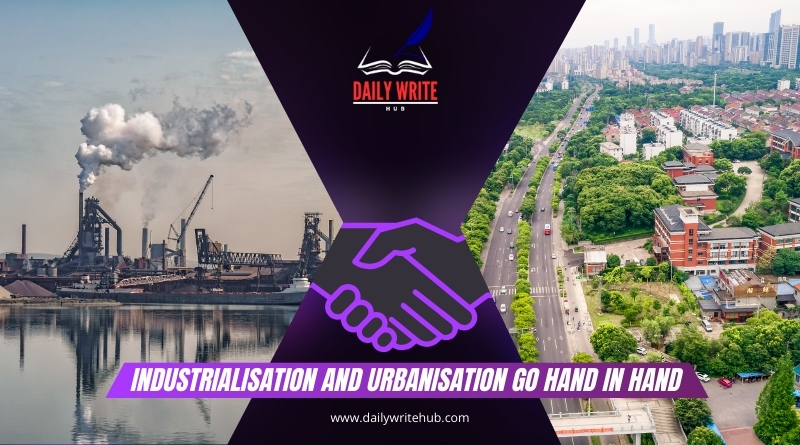
Why Industrialisation and Urbanisation Go Hand in Hand
Industrialisation and urbanisation are two major processes that shape the development of a country. Although they are different, they are deeply connected and usually grow together. When industries grow, cities expand, and when cities develop, industries become stronger. This close relationship explains why industrial areas often turn into large urban centers over time.
What Is Industrialisation?
Industrialisation is the process of developing industries such as factories, manufacturing units, and production centers. It involves the use of machines, technology, and skilled labor to produce goods on a large scale. Industrialisation reduces dependence on agriculture and creates new employment opportunities. It also increases national income, improves productivity, and supports economic growth.
What Is Urbanisation?
Urbanisation refers to the increase in population living in cities and towns due to migration from rural areas. People move to cities because urban areas offer better job opportunities, higher wages, education, healthcare, transportation, and improved living conditions. As a result, cities grow in size, population, and importance.
How Industrialisation Leads to Urbanisation
Industrialisation is one of the main causes of urbanisation. Industries are usually set up in or near cities because urban areas provide electricity, transport, communication facilities, and access to markets. Factories need a large workforce, so people from villages migrate to cities in search of employment.
As workers move to urban areas, the demand for housing, schools, hospitals, markets, and entertainment increases. To meet these needs, cities expand and new urban settlements develop. Over time, small towns may turn into big cities due to industrial growth. For example, many industrial cities grew around factories, ports, and mining centers.
How Urbanisation Supports Industrialisation
Urbanisation also helps industrialisation grow faster. Cities provide a concentrated labor force, including skilled and semi-skilled workers. They also offer better infrastructure such as roads, railways, ports, power supply, and digital connectivity, which are essential for industrial activities.
Urban areas have financial institutions like banks and insurance companies that support industries with investments and loans. In addition, a large urban population creates a strong market for industrial goods, encouraging industries to expand production. Thus, urbanisation creates a supportive environment for industrial growth.
Economic and Social Benefits
The combined growth of industrialisation and urbanisation leads to economic development. It increases employment opportunities, raises income levels, and improves living standards. People gain access to better education, healthcare, and modern amenities. Industrial and urban growth also encourages technological advancement and innovation.
Challenges of Rapid Growth
While industrialisation and urbanisation bring many benefits, rapid and unplanned growth can create problems. Overcrowding, pollution, traffic congestion, unemployment, housing shortages, and pressure on water and sanitation systems are common challenges in growing cities. Environmental degradation is another serious concern.
To reduce these problems, proper urban planning, sustainable industrial practices, and balanced regional development are necessary. Developing industries in smaller towns and rural areas can also help reduce excessive pressure on major cities.
Relationship Between Industrialisation and Urbanisation
| Industrialisation | Urbanisation |
|---|---|
| Focuses on the growth of factories and industries | Focuses on the growth of cities and towns |
| Creates employment opportunities | Attracts people from rural areas |
| Requires skilled and unskilled labor | Provides a large workforce |
| Needs infrastructure like power, transport, and markets | Develops infrastructure to support population growth |
| Encourages rural-to-urban migration | Expands due to population movement |
| Increases production of goods | Increases demand for goods and services |
| Leads to economic growth | Improves living standards and services |
| Develops near cities for easy operations | Grows around industrial centers |
Conclusion
Industrialisation and urbanisation go hand in hand because they support and strengthen each other. Industries attract people to cities by providing jobs, while cities offer the infrastructure and services industries need to operate efficiently. Together, they play a crucial role in economic development and the transformation of society. When managed properly, their growth can lead to long-term progress and improved quality of life.