
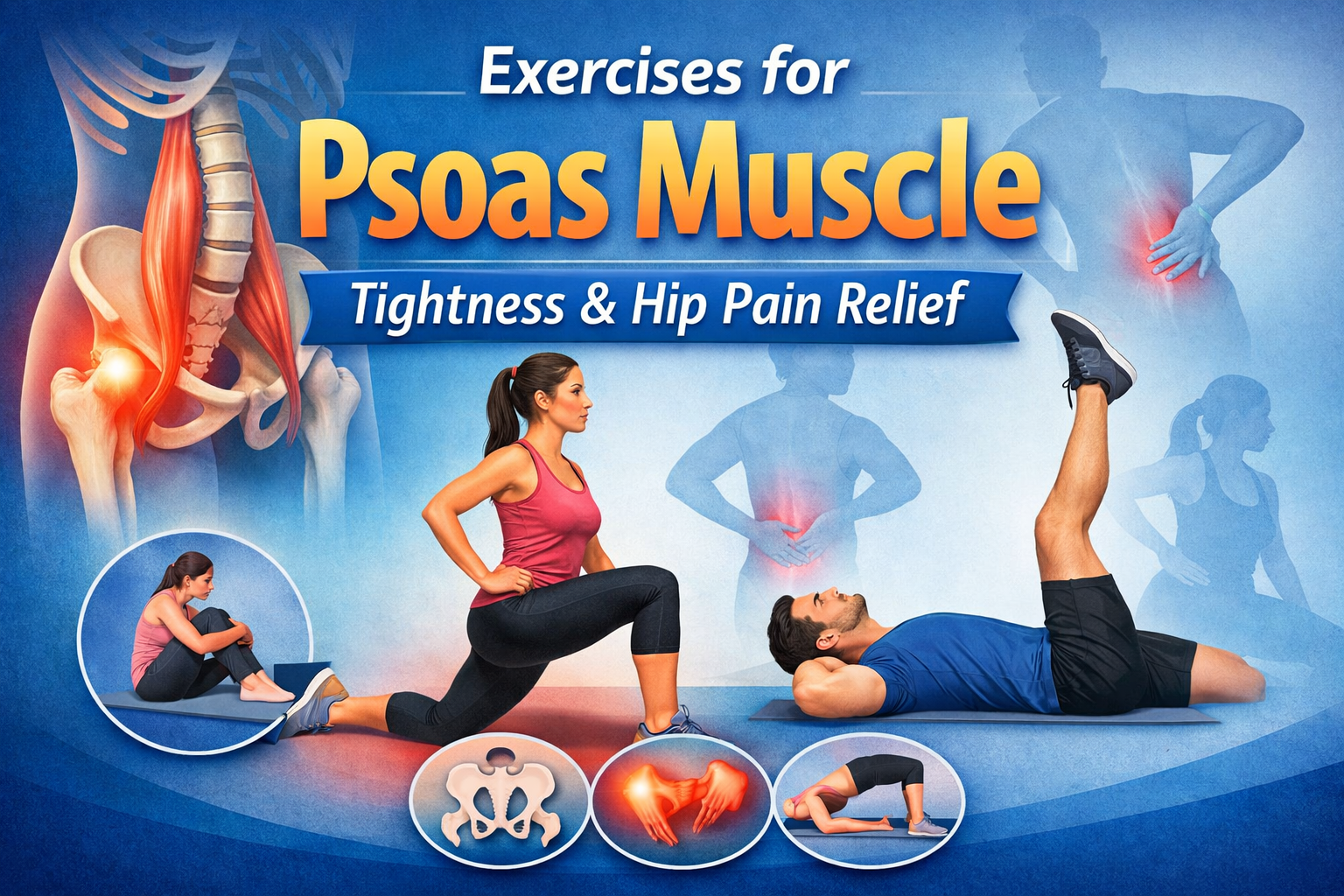
Exercises for Psoas Muscle Tightness and Hip Pain
The psoas muscle is one of the most important muscles in your body, yet it is often overlooked. It runs deep inside the body, connecting the lower spine to the hips and thighs. This muscle helps you walk, run, sit, bend, and maintain good posture. When the psoas muscle becomes tight, it can lead to hip pain, lower back discomfort, stiffness, and limited movement.
Psoas muscle tightness is very common today due to long hours of sitting, lack of physical activity, poor posture, and stress. The good news is that regular stretching and strengthening exercises can help relax the psoas muscle, reduce pain, and improve overall hip mobility.
What Causes Psoas Muscle Tightness?
Understanding the cause helps prevent the problem from returning. Common causes include:
- Sitting for long periods (office work, driving, studying)
- Poor posture while sitting or standing
- Lack of stretching or exercise
- Weak core and hip muscles
- Stress and tension stored in the body
- Sudden movements or overuse during workouts
Common Symptoms of Tight Psoas Muscle
You may have psoas muscle tightness if you experience:
- Pain in the hips, groin, or lower back
- Stiffness after waking up or standing from a chair
- Difficulty walking or taking long strides
- Pain while climbing stairs
- One hip feeling tighter than the other
- Poor posture or leaning forward while standing
Ignoring these symptoms may lead to long-term hip or lower back issues.
Best Exercises for Psoas Muscle Tightness and Hip Pain
1. Kneeling Hip Flexor Stretch
This stretch directly targets the psoas muscle and is highly effective.
How to do it:
- Kneel on your right knee and place your left foot forward
- Keep your back straight and core engaged
- Slowly push your hips forward until you feel a stretch
- Hold for 20–30 seconds
- Switch sides
Benefits:
- Reduces tightness
- Improves hip flexibility
- Relieves lower back pressure
2. Standing Psoas Stretch
A quick and easy stretch you can do at home or work.
How to do it:
- Stand with one foot in front and one foot behind
- Slightly bend the front knee
- Gently push your hips forward
- Keep your chest upright
- Hold for 20 seconds and switch sides
Benefits:
- Improves posture
- Reduces hip stiffness
- Increases mobility
3. Low Lunge Stretch
This stretch deeply opens the hips and lengthens the psoas muscle.
How to do it:
- Step one foot forward into a lunge
- Drop the back knee to the floor
- Place hands on your front knee or floor
- Gently push hips forward
- Hold for 20–30 seconds
Benefits:
- Releases deep muscle tension
- Improves hip range of motion
- Reduces pain caused by prolonged sitting
4. Lying Leg Raise
This exercise helps strengthen the psoas muscle, which is just as important as stretching.
How to do it:
- Lie flat on your back with legs straight
- Keep one leg on the floor and slowly lift the other
- Lift to a comfortable height, then lower slowly
- Repeat 10–12 times on each side
Benefits:
- Builds psoas strength
- Supports hip stability
- Prevents future tightness
5. Bridge Pose
Bridge pose activates the hips, glutes, and core while easing psoas tension.
How to do it:
- Lie on your back with knees bent and feet flat
- Press through your feet and lift your hips
- Squeeze your glutes gently
- Hold for 10–20 seconds
- Lower slowly and repeat
Benefits:
- Improves hip alignment
- Reduces lower back pain
- Strengthens supporting muscles
6. Seated Knee-to-Chest Stretch
A gentle stretch suitable for beginners and people with limited mobility.
How to do it:
- Sit on the floor or a chair
- Pull one knee toward your chest
- Hold for 20–30 seconds
- Switch legs
Benefits:
- Relaxes tight hip muscles
- Improves circulation
- Reduces stiffness
7. Supine Psoas Stretch
This stretch allows the psoas muscle to relax naturally.
How to do it:
- Lie on your back near the edge of a bed
- Pull one knee toward your chest
- Let the other leg hang down
- Hold for 20–30 seconds
- Switch sides
Benefits:
- Deeply stretches the psoas
- Reduces hip and lower back tension
- Promotes muscle relaxation
Tips to Relieve and Prevent Psoas Muscle Tightness
- Take short breaks from sitting every 30–60 minutes
- Maintain good posture while sitting and standing
- Stretch daily, especially after long sitting hours
- Strengthen core and hip muscles
- Avoid sudden or jerky movements
- Practice deep breathing to release tension
When to See a Doctor or Physiotherapist
If hip pain or psoas tightness:
- Lasts more than a few weeks
- Becomes severe or sharp
- Affects daily activities
- Spreads to the leg or groin
It’s best to consult a healthcare professional for proper evaluation.
Final Thoughts
Psoas muscle tightness and hip pain can greatly affect your daily comfort and movement. With regular stretching, gentle strengthening, and better posture habits, you can reduce pain and improve flexibility. These exercises are simple, safe, and suitable for most people. Just a few minutes each day can make a big difference in how your hips and lower back feel.
Consistency and patience are the keys to long-term relief.