
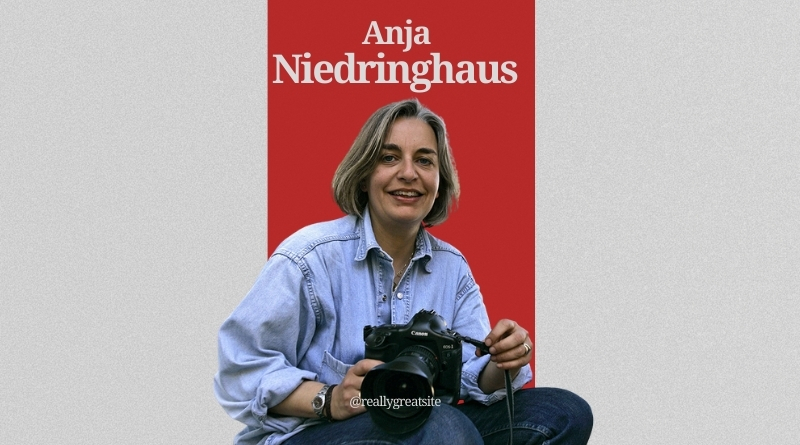
Anja Niedringhaus and the Power of Photojournalism in Conflict Zones
Photojournalism has long played a vital role in shaping how the world understands war, conflict, and humanitarian crises. Few photographers embodied this responsibility with as much courage and humanity as Anja Niedringhaus, a German photojournalist whose work for the Associated Press (AP) brought the realities of conflict zones into global focus. Through her lens, Niedringhaus demonstrated the profound power of photojournalism—not only to document events, but to humanize them.
Early Life and the Beginning of a Visual Storyteller
Anja Niedringhaus was born on 12 October 1965 in Höxter, North Rhine-Westphalia, Germany. Her passion for photography emerged early; she began working as a freelance photographer at just 17 years old, while still in high school. One of her earliest major assignments was covering the fall of the Berlin Wall in 1989, an event that symbolized dramatic political and social change. This moment marked the start of a career deeply intertwined with history in the making.
A Career Shaped by Conflict Reporting
In 1990, Niedringhaus joined the European Pressphoto Agency (EPA) in Frankfurt, where she later became Chief Photographer. During this period, she spent nearly a decade covering the wars in the former Yugoslavia, developing a distinctive style that balanced raw realism with deep empathy.
Following the September 11, 2001 attacks, she photographed the aftermath in New York City before traveling to Afghanistan, where she documented the fall of the Taliban. In 2002, she joined the Associated Press, expanding her coverage to some of the world’s most volatile regions, including Iraq, Afghanistan, Gaza, Israel, Kuwait, and Turkey.
Her work was not focused solely on combat. Instead, Niedringhaus highlighted the human cost of war—women, children, and civilians navigating life amid destruction. This perspective set her apart and reinforced the essential role of photojournalism in conflict zones.
Recognition and Global Impact
Anja Niedringhaus’ commitment to truthful storytelling earned her international recognition. In 2005, she was the only woman among 11 AP photographers awarded the Pulitzer Prize for Breaking News Photography for coverage of the Iraq War. That same year, she received the International Women’s Media Foundation’s Courage in Journalism Award, honoring her bravery and dedication.
In 2007, she became a Nieman Fellow at Harvard University, where she studied culture, history, religion, and gender issues in the Middle East. This academic experience further enriched her understanding of the regions she photographed, strengthening the depth and context of her visual reporting.
Her photographs were exhibited in prestigious institutions, including the Museum of Modern Art in Frankfurt, and her life and work were later portrayed in the biopic Anja: Life on the Frontline.
The Risks and Reality of Conflict Zone Journalism
Niedringhaus’ career also highlights the extreme risks faced by journalists in war zones. On 4 April 2014, while covering Afghanistan’s presidential election, she was killed by an Afghan police officer at a checkpoint in Khost province. Her colleague, journalist Kathy Gannon, was seriously injured in the same attack.
Her death underscored the dangers inherent in conflict reporting and sparked global conversations about journalist safety, press freedom, and the sacrifices made to inform the world.
The Power of Photojournalism: Niedringhaus’ Lasting Legacy
Anja Niedringhaus believed that photography could foster understanding and accountability. Her images did more than report facts—they gave faces to statistics, turning distant conflicts into deeply personal stories for audiences worldwide.
Her legacy lives on as a reminder that photojournalism in conflict zones is not just about documenting violence, but about preserving truth, dignity, and humanity. For aspiring journalists and photographers, Niedringhaus remains a symbol of courage, ethical storytelling, and the enduring power of visual journalism.
Conclusion
Anja Niedringhaus’ life and work exemplify the transformative power of photojournalism in conflict zones. Through unwavering bravery and compassion, she showed the world what it means to bear witness. Her images continue to speak where words fall short, ensuring that the stories of those affected by conflict are neither ignored nor forgotten.